Survivor.io: Global Ad Creative Analysis — 90-Day Review
This report examines how skill-selection hooks, enemy hordes and area-of-effect attacks recur across Survivor.io’s global advertising creatives.
Analysis window · Aug 7 – Nov 4, 2026 · Android · iOS
1 vs 100 → SURVIVE
01 / Executive summary
Executive summary
AppGrowing observed 600 unique Survivor.io ad creatives active between August 7 and November 4, 2026. Portrait and landscape videos accounted for 429 creatives, or 71.5% of the total. Channel-level ad records totaled 2,686 for the report’s Google group, 1,782 for its Facebook group and 1,132 for TikTok. The featured videos typically connect a skill-selection hook with an immediate gameplay payoff. The featured static creatives emphasize characters, enemy hordes or rewards through a clear visual focal point.
600Deduplicated creatives
5,600Ad records across channel groups
71.5%Share of creatives that are videos
90Days in the observation period
Impression figures are cumulative estimates for each creative, not impressions delivered within the observation period. The 90-day window identifies which creatives were active and describes the creative mix. Ad-record counts are not spend, installs or conversions.
Store listings emphasize survival and skill combinations; the ads demonstrate the impact of each choice.
The store listings emphasize one-handed controls, large enemy waves and roguelike skill combinations. User acquisition (UA) videos translate these features into a short visual sequence: a skill card appears, the player selects or upgrades the skill, the attack covers a larger area, and enemies are cleared. Long-running creatives in the Google group emphasize in-game footage and a “1 vs. 100” scenario. Featured creatives in the Facebook group place greater emphasis on new skill cards and the contrast between combat before and after an upgrade.
Store positioningCreative executionSupporting creative
Players use one-handed controls to move and survive.
The ad opens with a surrounded character who breaks through the enemy horde using movement and firepower.
Ad-record distribution across three reporting groups
The source report groups AdMob, YouTube, Unity Ads and AppLovin under “Google,” and Facebook, Instagram, Audience Network, Messenger and Threads under “Facebook.” These labels are retained for consistency; they are analytical groupings, not statements of corporate ownership. Counts sum channel-level ad records, so an ad appearing across multiple channels may contribute more than once. The 600 unique creatives are deduplicated across channels. The percentages below represent shares of ad records, not shares of spend or impressions.
Google
2,68648.0%
Facebook
1,78231.8%
TikTok
1,13220.2%
Reporting group
Ad records
Share of ad records
Recurring creative approach
Google
2,686
48.0%
In-game footage · 1 vs. 100 · long-running creatives
Facebook
1,782
31.8%
Skill cards · before-and-after upgrades · characters and rewards
TikTok
1,132
20.2%
Short gameplay clips · skill-card variants
Featured creatives by channel group
Each creative card displays the source’s cumulative estimated impression figure or range. These figures are not limited to the 90-day observation period. Select a Creative ID to view its original AppGrowing record. Reach and longevity alone do not establish conversion performance.
Facebook
10 creatives
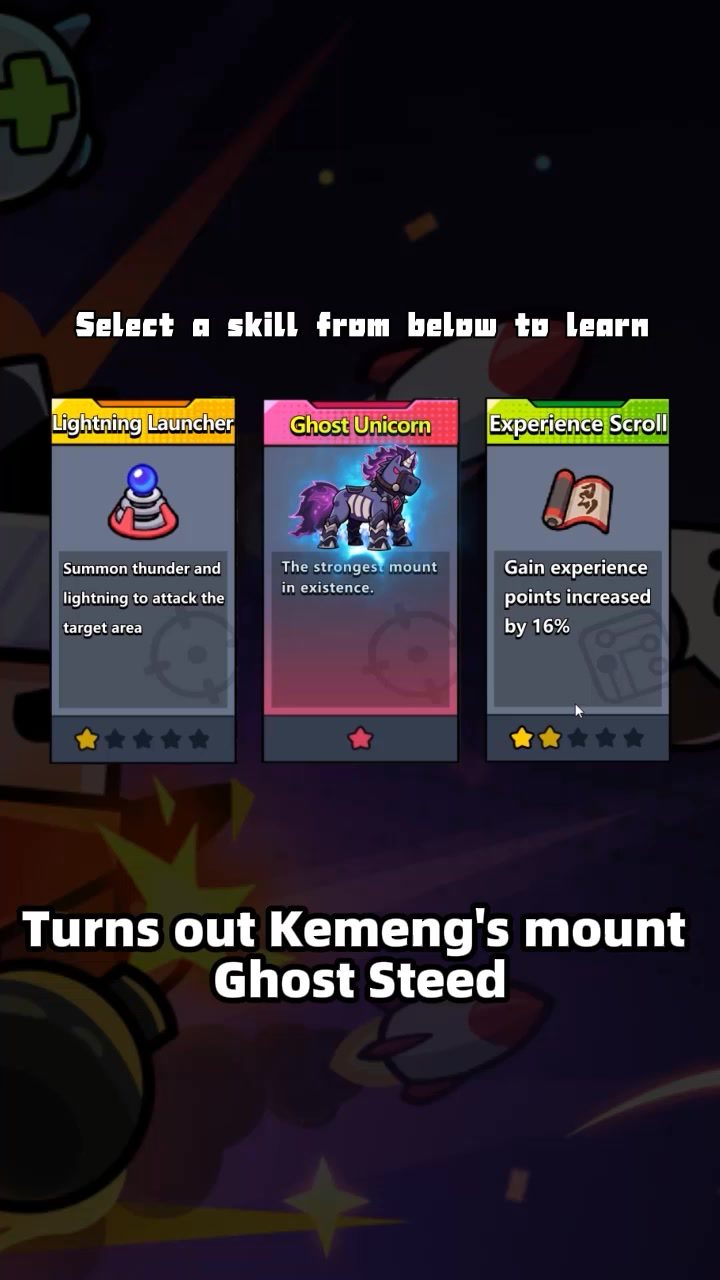
Featured creatives in the Facebook group frequently use portrait videos that connect skill-selection cards with upgraded combat. Variants retain the card layout while changing the skill, character or on-screen outcome message.
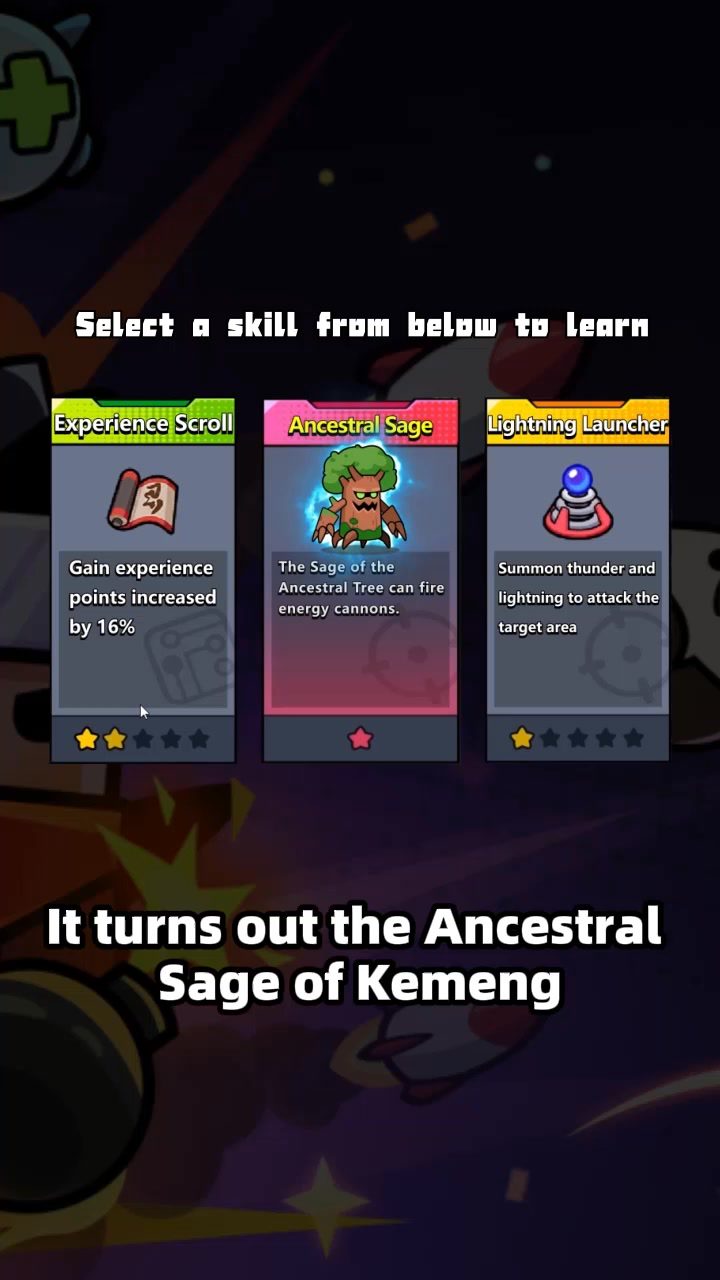
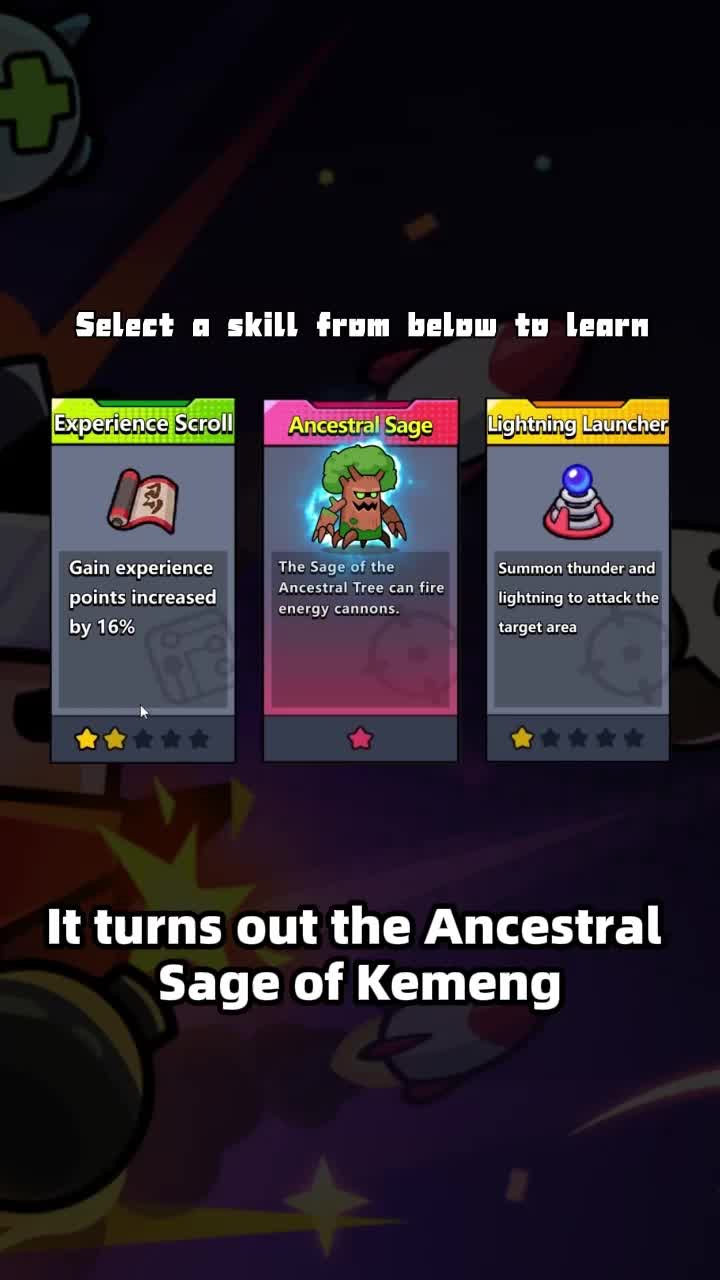
The video opens with three skill cards and a 20-minute survival challenge. The tree-like companion then grows larger and clears enemies over a wider area.
>10MEst. lifetime impressions142Similar creatives10Associated ad records
This variant retains the three-card selection interface but focuses on mount growth. The mount becomes larger and clears enemies with a trampling attack.
>10MEst. lifetime impressions146Similar creatives9Associated ad records
The character remains at the center while enemies and projectiles approach from both sides. Dodging and counterattacks connect the initial threat with a visible combat payoff.
>10MEst. lifetime impressions18Similar creatives9Associated ad records
An injured cartoon character appears beside the message “WE NEED YOU BACK.” The creative uses an emotional re-engagement appeal to address returning players.
5.0MEst. lifetime impressions2Similar creatives5Associated ad records
Long-running creatives in the Google group emphasize in-game footage and the contrast between a small character and a large enemy horde. Some videos use live-action reactions as the opening hook before, or alongside, the gameplay demonstration.
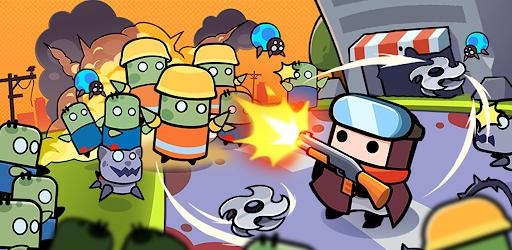
A landscape illustration places a small character at the center of a dense enemy horde. The contrast in scale communicates the one-versus-many survival challenge.
>10MEst. lifetime impressions35Similar creatives148Associated ad records
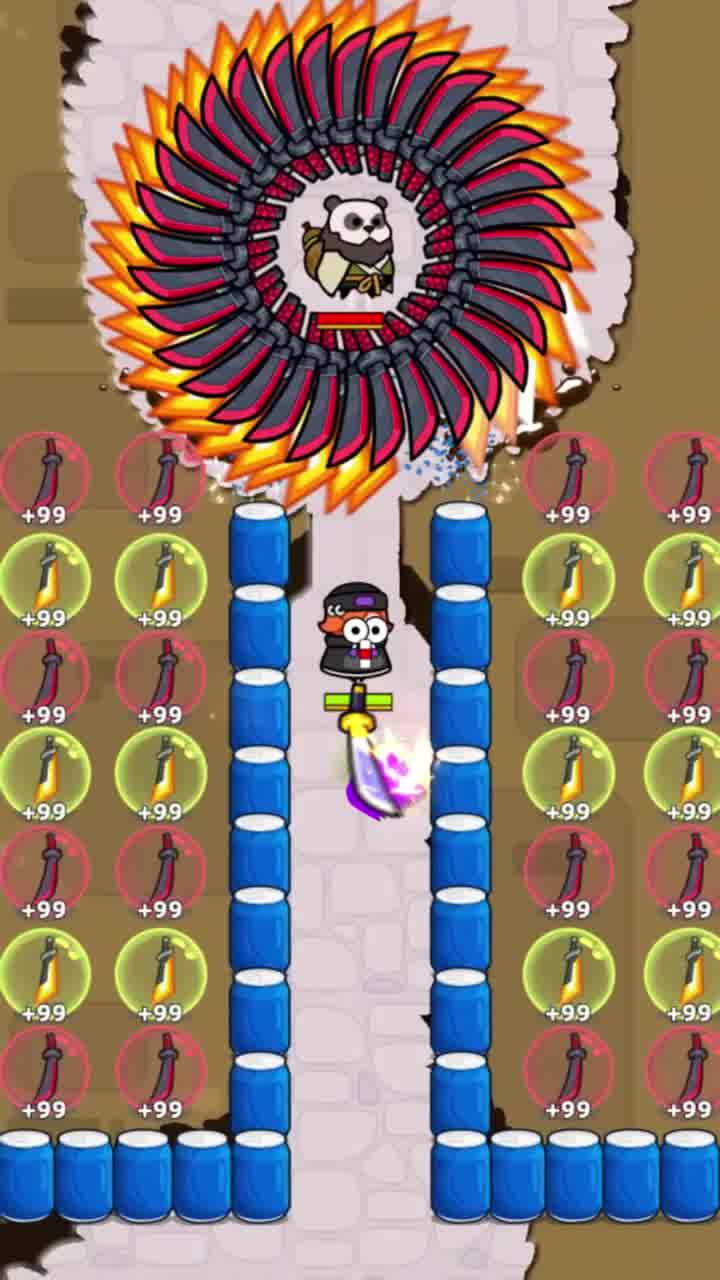
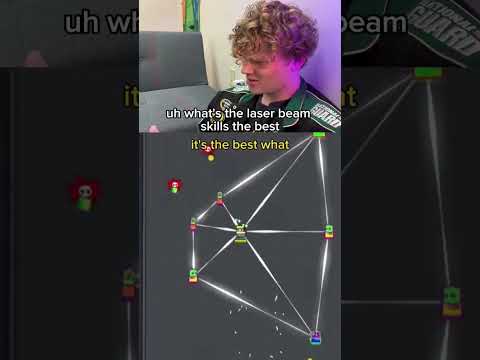
A live-action reaction occupies the upper panel while gameplay below shows a character clearing enemies with a spinning weapon. Both elements remain visible in the same frame.
9.6MEst. lifetime impressions1Similar creatives30Associated ad records
The video opens with a live-action conversation. This opening relies on the subsequent gameplay sequence to identify the advertised game and explain its mechanics.
4.8MEst. lifetime impressions2Similar creatives38Associated ad records
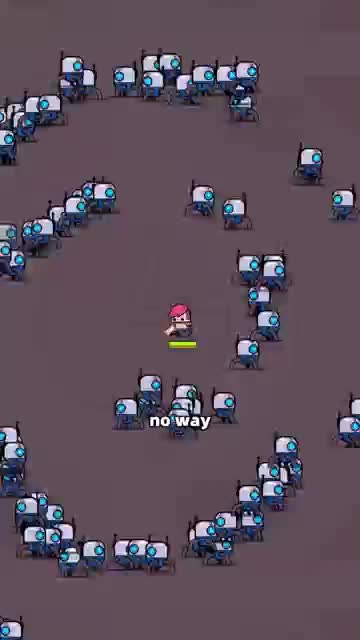
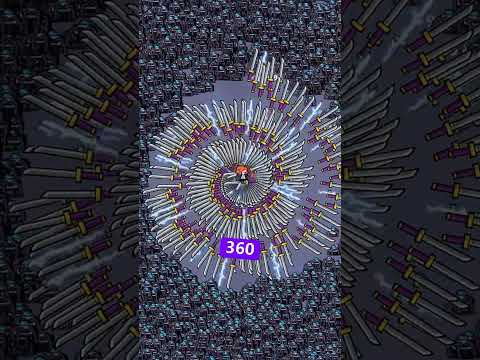
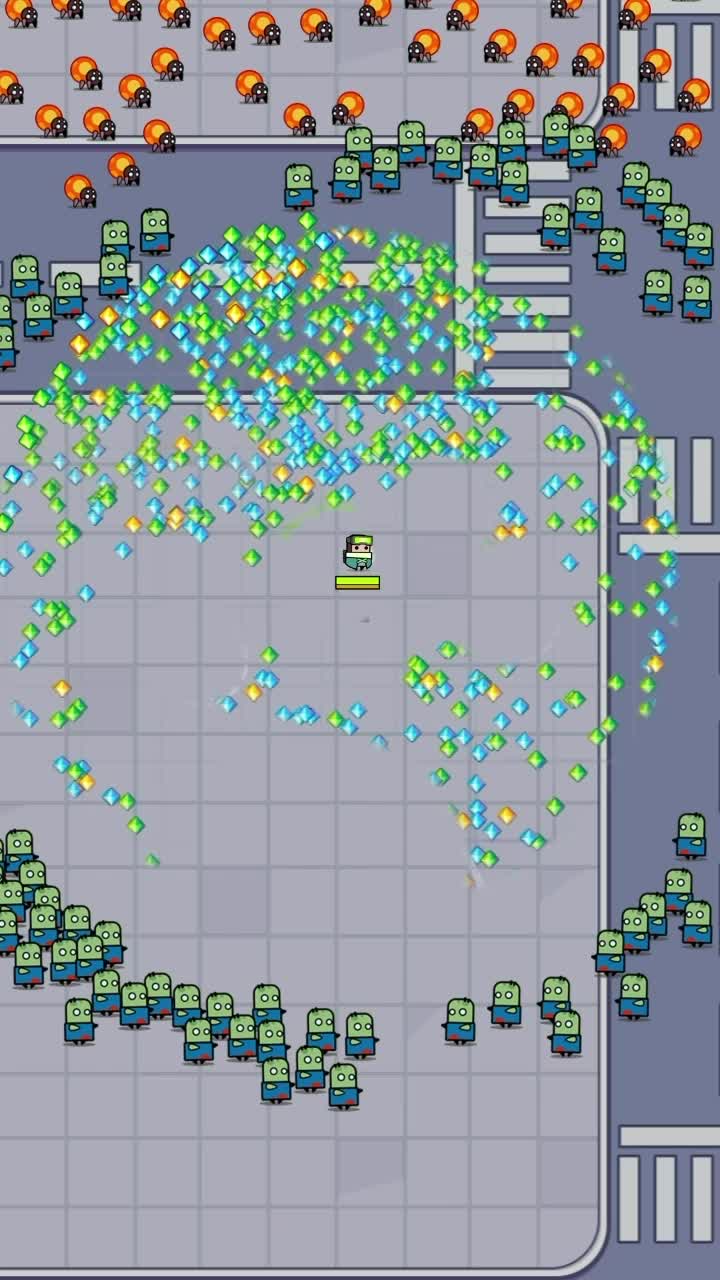
The video opens directly with top-down gameplay. A surrounded character moves and attacks continuously, linking survival pressure with repeated enemy-clearing payoffs.
4.5MEst. lifetime impressions6Similar creatives63Associated ad records
Two live-action participants lead the opening with facial expressions and conversation. Their reactions provide the initial hook before the gameplay is established.
4.3MEst. lifetime impressions0Similar creatives12Associated ad records
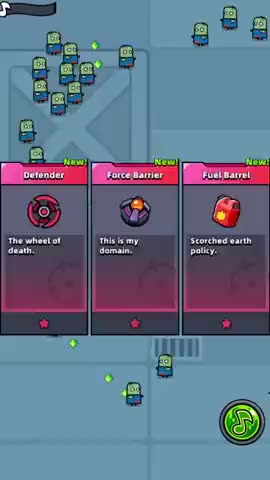
This creative uses a pink skill-card layout similar to the Facebook example. It changes the weapon name on the card and the combat sequence that follows.
3.0MEst. lifetime impressions69Similar creatives100Associated ad records
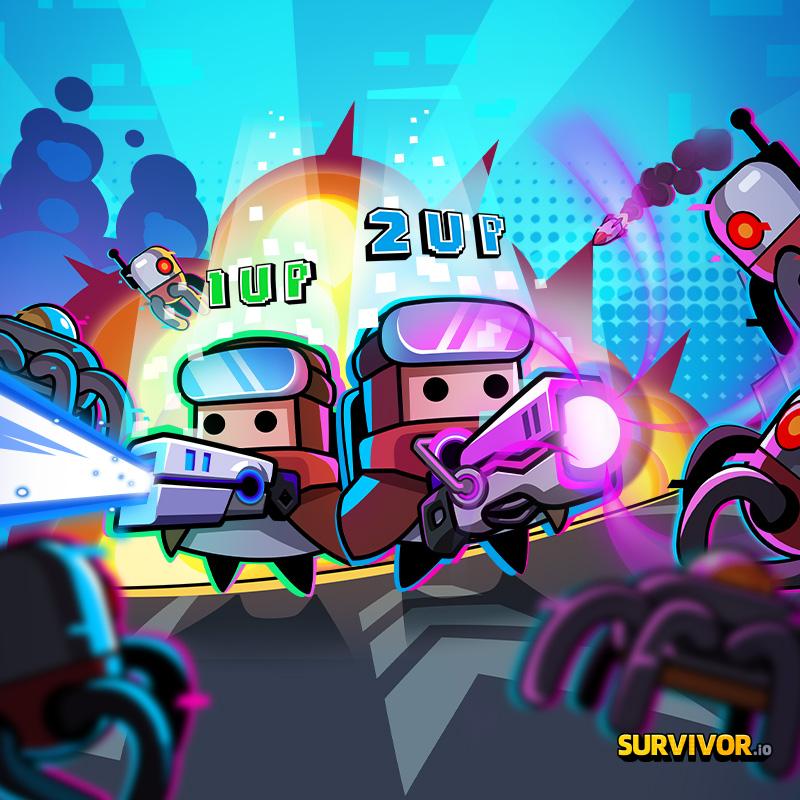
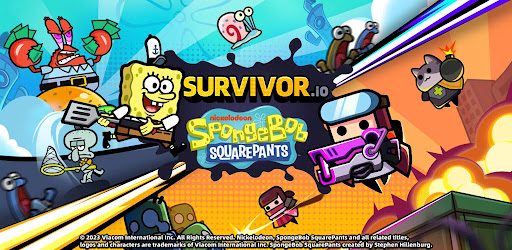
A landscape ensemble image pairs crossover characters with the game’s protagonist. Familiar characters and branding take visual priority over a demonstration of the controls.
2.1MEst. lifetime impressions3Similar creatives6Associated ad records
The character sits in the lower-left corner, while “Free Rewards” copy and item icons occupy the right side. This layout presents the reward offer clearly in a landscape placement.
1.1MEst. lifetime impressions0Similar creatives6Associated ad records
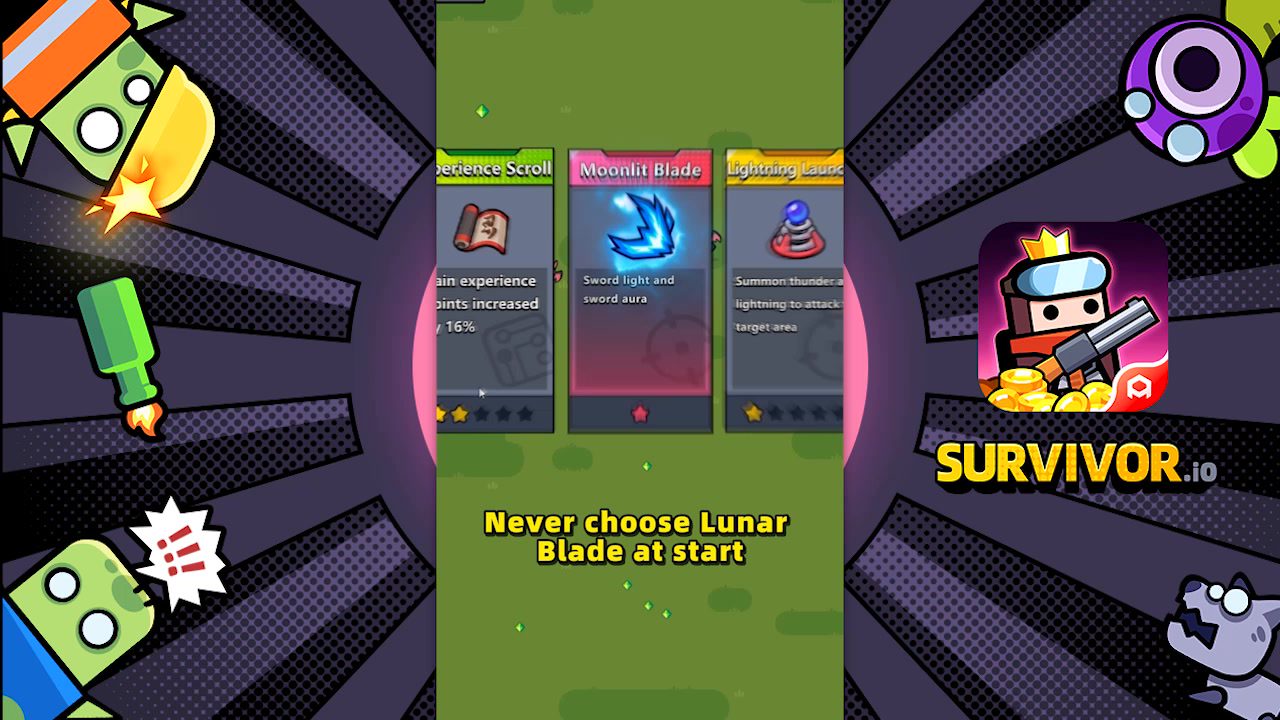
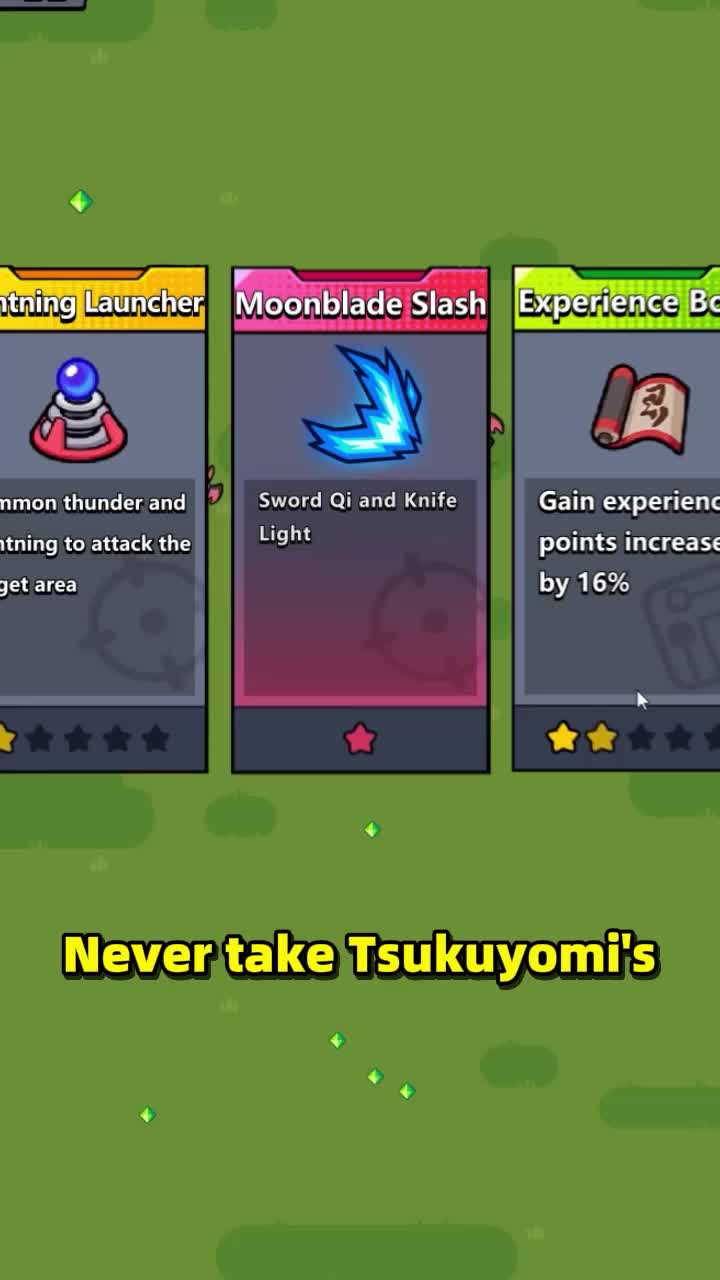
Three skill cards fill most of the portrait frame. The caption “Never take...” creates a negative-choice hook by suggesting that one skill should be avoided.
1.1MEst. lifetime impressions0Similar creatives3Associated ad records
Android · YouTube
TikTok
4 creatives
The featured TikTok creatives use short skill-card variants and gameplay sequences that show rapid enemy clearing. Their cumulative estimated impression figures are lower than those of the featured Facebook and Google examples, so comparisons should be made within the same channel group.
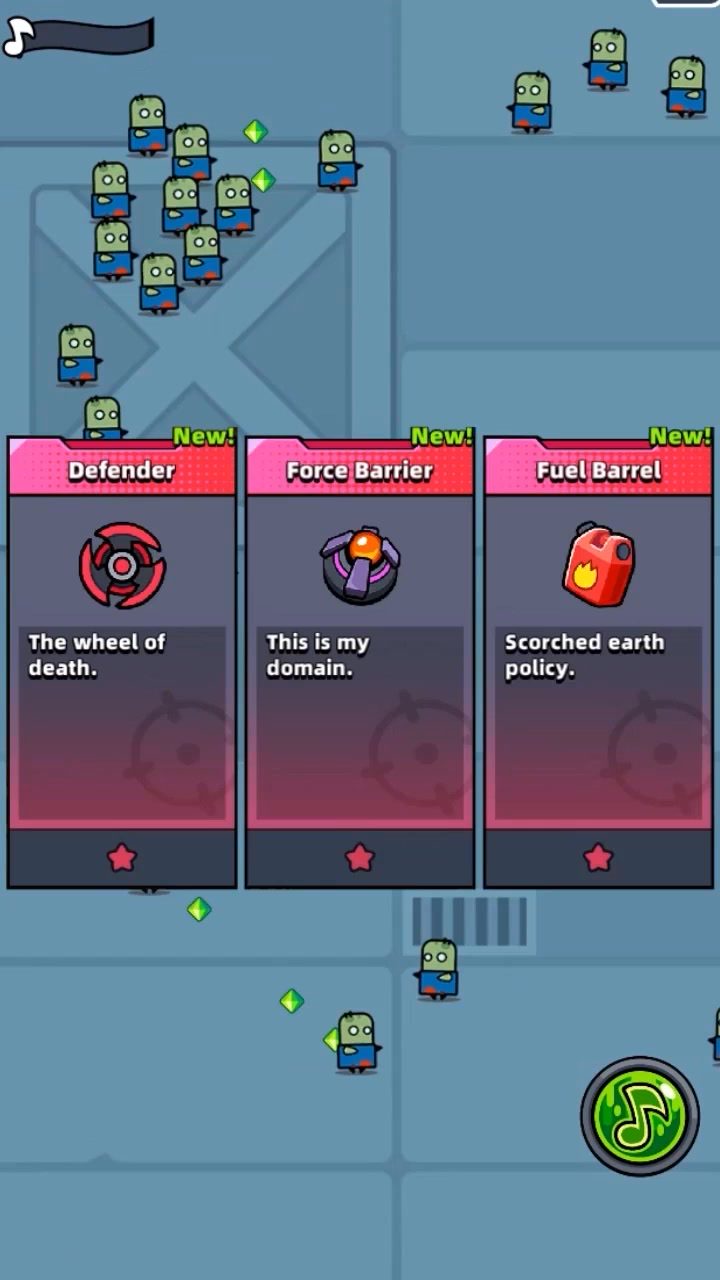
The opening presents three skill cards and highlights Moonblade Slash. A short caption invites viewers to consider whether that skill is the best choice.
54.8KEst. lifetime impressions134Similar creatives99Associated ad records
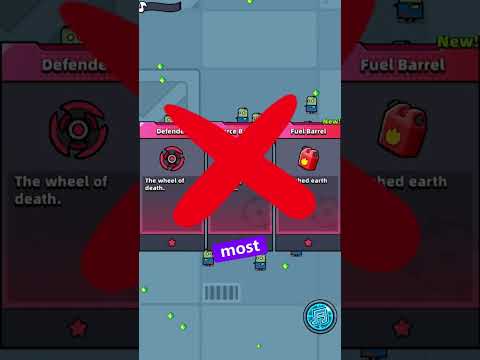
Enemies fill the screen around a small character. An area-of-effect attack then clears the horde, creating an immediate contrast between danger and relief.
49.3KEst. lifetime impressions14Similar creatives105Associated ad records
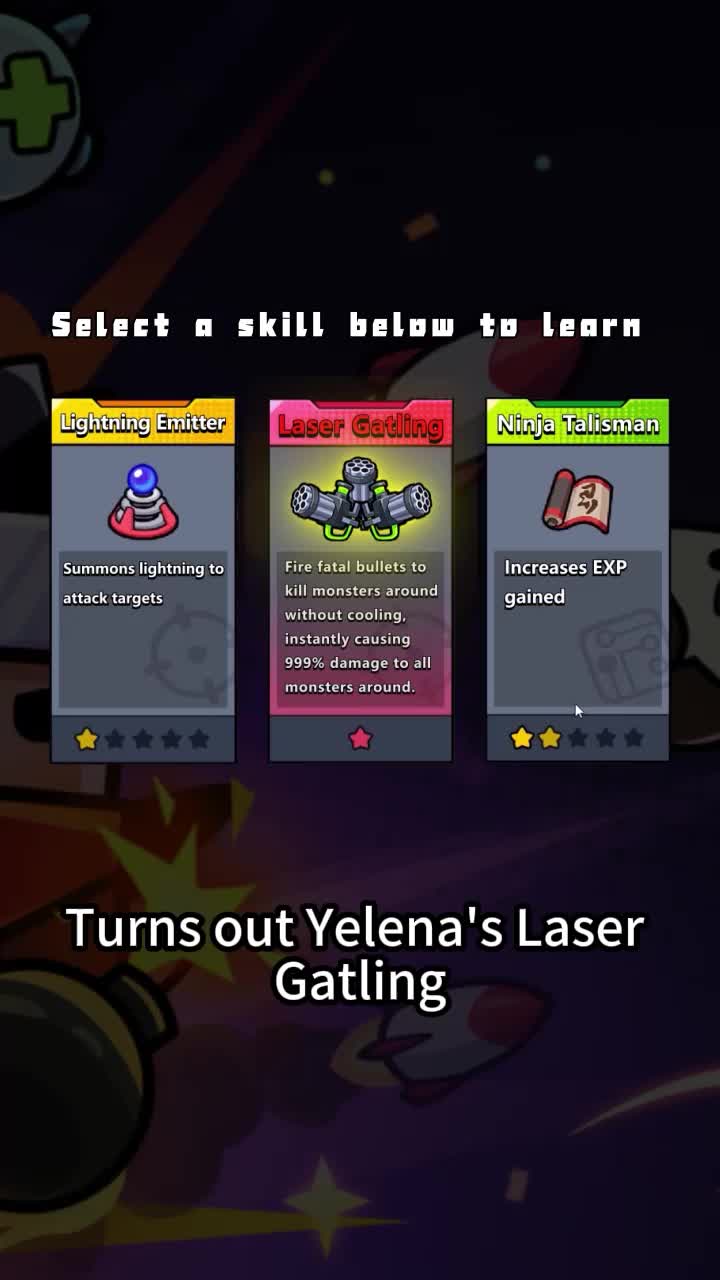
This variant retains the three-card selection layout while shifting the featured ability to Yelena’s Laser Gatling.
30.6KEst. lifetime impressions116Similar creatives98Associated ad records
Android + iOS · TikTok
04 / Markets & formats
Geographic distribution of observed advertising
Japan, the United States and Hong Kong rank highest by active creative count. Switzerland, Germany and the United Kingdom rank highest by ad-record count. An ad running in several markets can be counted in each market. The two rankings therefore measure different aspects of activity and should not be interpreted as spend rankings.
Top 5 markets by creative count
01Japan459
02United States446
03Hong Kong437
04Germany426
05United Kingdom414
Top 5 markets by ad-record count
01Switzerland2,037
02Germany2,013
03United Kingdom2,006
04Austria1,793
05France1,731
Video accounts for most creatives, while static creative share rises in the final 30-day period.
The 600 creatives include 296 portrait videos, 133 landscape videos, 82 static images and 52 web-format creatives, with the remaining 37 in the other-format category shown below. Across the three successive 30-day periods, active static creatives increased from 47 to 56 to 68. Their share of active creatives rose from 11.3% in the first period to 20.9% in the final period.
296
Vertical video49.3%
133
Horizontal video22.2%
82
Image13.7%
52
Web8.7%
37
Other6.2%
Active creative counts by 30-day period
Each count includes creatives observed at least once in that period. A creative may appear in more than one period, so these counts should not be added to obtain a unique total.
Aug 7 – Sep 5415Sep 6 – Oct 5378Oct 6 – Nov 4325
05 / Video analysis
Video creative analysis: opening hook, gameplay demonstration and closing frame
Six examples were selected by considering cumulative estimated impressions, related creative counts and differences in visual structure. Four source videos can be played below; the other two are represented by a preview image and a link to the original creative record.
Video · 190s · Android + iOS
A 28-second skill-selection hook with an immediate gameplay payoff
The video opens with three skill cards and a challenge to survive for 20 minutes. It then cuts to gameplay in which a tree-like companion grows larger and clears enemies across a wider area. The sequence demonstrates both the decision and its effect before closing on the game logo.
>10MEst. lifetime impressions
142Similar creatives
10Associated ad records
First seen: 2026-04-29 · Last seen: 2026-11-04 Channels: Messenger · Instagram · Facebook · Audience Network · Threads
A 29-second demonstration of an upgraded weapon’s attack coverage
A pink skill card marked “NEW” draws attention to the weapon. The video then cuts to combat to demonstrate how the upgrade expands its attack coverage. The gameplay makes the benefit visible without requiring viewers to read a detailed skill description.
>10MEst. lifetime impressions
89Similar creatives
16Associated ad records
First seen: 2026-02-25 · Last seen: 2026-11-04 Channels: Threads · Instagram · Facebook · Messenger · Audience Network
A 41-second sequence that turns combat pressure into a visual payoff
The character stays at the center as enemies and projectiles close in from both sides. Movement, dodging and counterattacks build toward an escape enabled by upgraded firepower. The contrast between the initial threat and the subsequent enemy clear provides the main visual appeal.
>10MEst. lifetime impressions
18Similar creatives
9Associated ad records
First seen: 2025-04-24 · Last seen: 2026-11-04 Channels: Messenger · Facebook · Audience Network · Instagram · Threads
A 41-second split-screen video combining live-action reactions with gameplay
A person reacts while looking at a phone in the upper panel. In the lower panel, a character clears enemies with a spinning weapon. The reaction serves as the attention hook, while simultaneous gameplay identifies the product and demonstrates the action.
9.6MEst. lifetime impressions
1Similar creatives
30Associated ad records
First seen: 2024-01-17 · Last seen: 2026-10-04 Channels: YouTube · AdMob · Unity Ads
A 29-second survival demonstration that opens directly with gameplay
A small character is surrounded by enemies from the opening frame. The character keeps moving and attacking as successive groups of enemies are cleared. This repeated threat-and-payoff sequence communicates the survival objective without a lengthy rules explanation.
4.5MEst. lifetime impressions
6Similar creatives
63Associated ad records
First seen: 2023-11-22 · Last seen: 2026-09-07 Channels: AdMob · YouTube · Unity Ads
A short TikTok variant built around a skill-selection prompt
The opening displays three skill cards and highlights Moonblade Slash. A short caption raises the question of whether the skill is worth selecting. Related variants retain the card interface while changing the featured skill and closing message.
54.8KEst. lifetime impressions
134Similar creatives
99Associated ad records
First seen: 2026-06-18 · Last seen: 2026-10-31 Channels: TikTok
An injured cartoon character appears beside the message “WE NEED YOU BACK.” The creative uses an emotional re-engagement appeal to address returning players.
5.0MEst. lifetime impressions2Similar creatives5Associated ad records
A landscape illustration places a small character at the center of a dense enemy horde. The contrast in scale communicates the one-versus-many survival challenge.
>10MEst. lifetime impressions35Similar creatives148Associated ad records
A landscape ensemble image pairs crossover characters with the game’s protagonist. Familiar characters and branding take visual priority over a demonstration of the controls.
2.1MEst. lifetime impressions3Similar creatives6Associated ad records
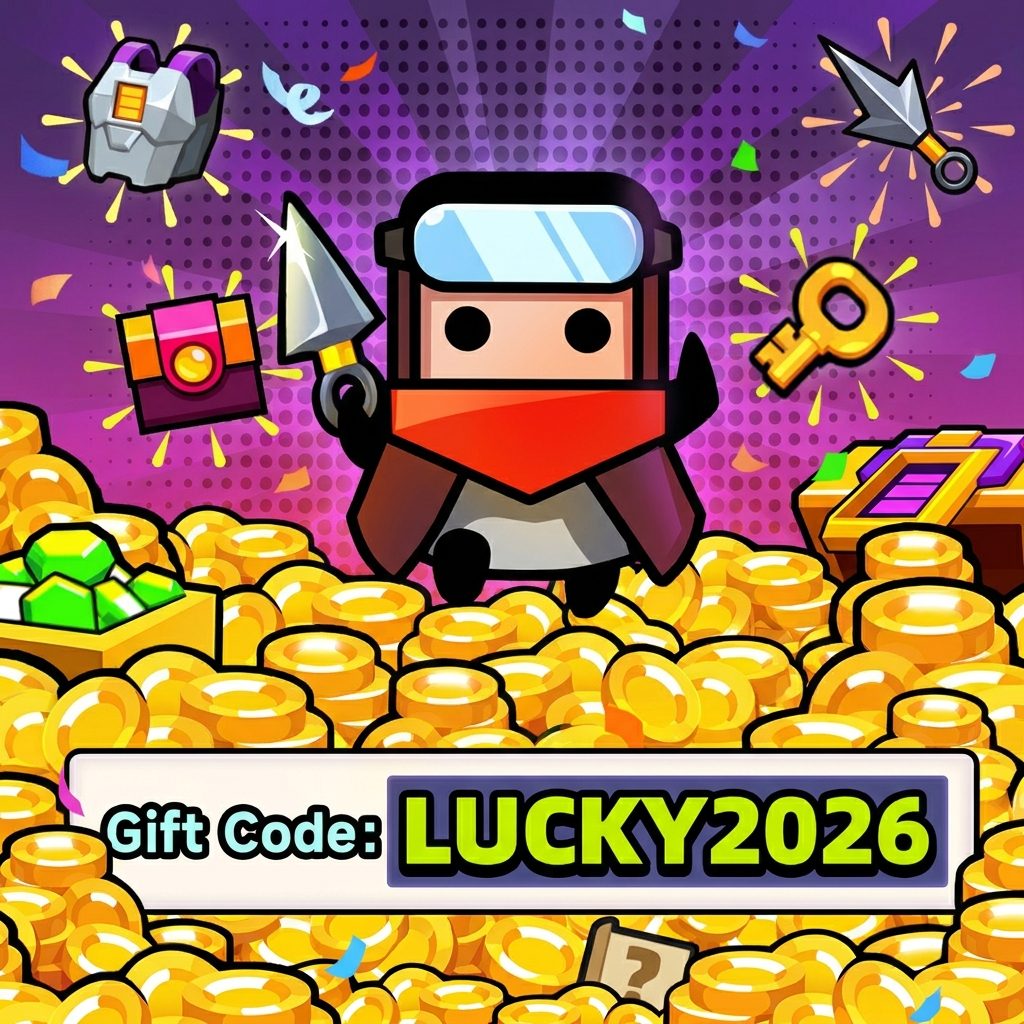
The headline “Free Rewards” appears over gift boxes and in-game currency, making the reward offer the main visual message.
1.9MEst. lifetime impressions21Similar creatives20Associated ad records
Android + iOS · YouTube 2025-08-27 — 2026-09-20
07 / Creative iteration
Recurring creative concepts and their variations
The analysis compares preview frames as well as Creative IDs. Creatives with similar visual structures are considered together to identify changes in skill selection, on-screen copy and gameplay demonstration.
01
Skill-selection hook → gameplay payoff
Facebook’s Kemeng skill-card creatives and related TikTok variants open with a choice of skills. The variants change the featured skill and outcome message, then show the corresponding effect in gameplay.
A consistent card interface with different weapons
Creatives in both the Facebook and Google groups pair a pink new-skill card with a blue-toned battlefield. Variants change the weapon shown on the card and the attack demonstrated in the following gameplay sequence.
A small character surrounded by a dense enemy horde
Long-running static images and gameplay videos in the Google group place a small character among many enemies. This composition communicates the survival challenge immediately, without requiring a lengthy explanation.
Videos in the Google group use a person’s reaction or commentary as an opening hook. Gameplay appears in a split-screen layout or a subsequent shot to establish the game and demonstrate its mechanics.
The recurring creative sequence links a skill choice to a visible gameplay payoff.
01Featured videos use a brief visual sequence to communicate the gameplay loop. They establish pressure through an approaching enemy horde, present a skill choice, and demonstrate its effect through a wider attack or a cleared battlefield. This sequence recurs in Facebook skill-card creatives and their TikTok variants.
02The Google group includes long-running “1 vs. 100” compositions and direct gameplay demonstrations. One landscape image first observed in 2023 was still active during the report’s 90-day observation period and had more than 10 million cumulative estimated impressions. The contrast between a small character and a dense enemy horde communicates the survival objective with little explanatory copy. Its longevity indicates continued use, but does not by itself establish campaign efficiency.
03Static creatives communicate character and reward appeals directly. A two-character battle poster emphasizes action, a redemption-code image highlights rewards, and a “WE NEED YOU BACK” message addresses returning players. The increase in static creative share during the final 30 days is consistent with a complementary role for images alongside gameplay videos. This is an interpretation of the creative mix, rather than evidence of a measured conversion lift.
Contact us
For more information about this report, please contact us.