The root cause may not be the creatives themselves, but the long-neglected Custom Product Pages (CPP).
How custom product pages affect UA
From a UX perspective, the paid-acquisition funnel is “Ad Impression→ App Store Landing Page → Conversion.”
When a user clicks an ad, they already form expectations about the product. If the store product page content differs from the ad, users feel a mismatch, may distrust the product, and ultimately abandon the download.
In other words, users don’t always leave because the creative is bad; they leave because the experience flow is broken.
This occurs frequently in practice, especially in “sub-gameplay UA” scenarios. For example, a casual-minigame creative may attract a user, but landing on a store page filled with SLG combat or progression content creates a “not what I expected” feeling.
Similarly, using creatives that emphasize limited-time rewards or collaborations during events while the store product page shows the regular version will not meet user expectations, so conversions drop.
The overlooked store feature: Custom Product Pages
App stores have long offered the capability to address this problem.
App Store and Google Play introduced CPP years ago and have been steadily enhancing them. Since October last year, the App Store supports up to 70 custom pages; Google Play supports 50 pages and added keyword-triggering in 2024.
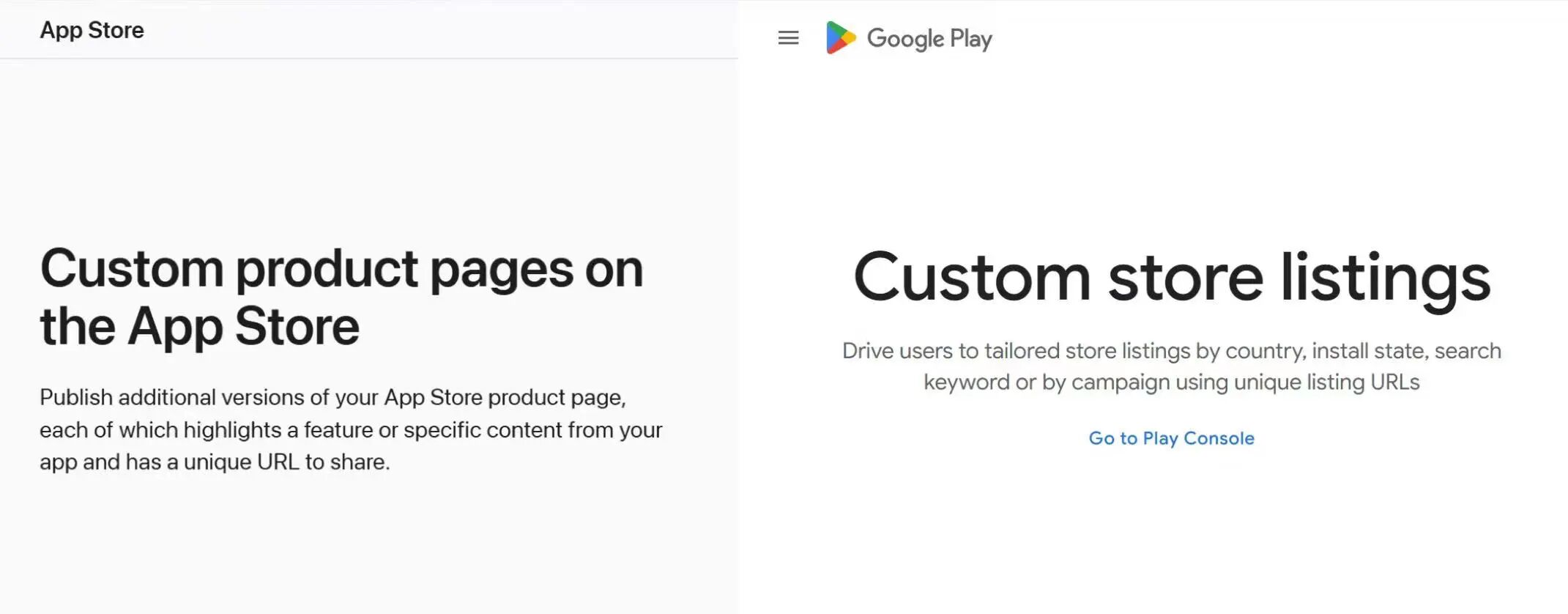
On one hand, store page content strategies prioritize compliance, while ad creatives prioritize acquisition—different focuses mean few publishers coordinate the two.
On the other hand, compared to UA, the market lacks analytics and strategy tools for custom product pages; optimizations rely on manual experience, so teams struggle to invest sustained effort.
The result: creative strategies keep evolving while store pages remain a single, static version, becoming the conversion bottleneck.
Case Study: Century Game's Strategy
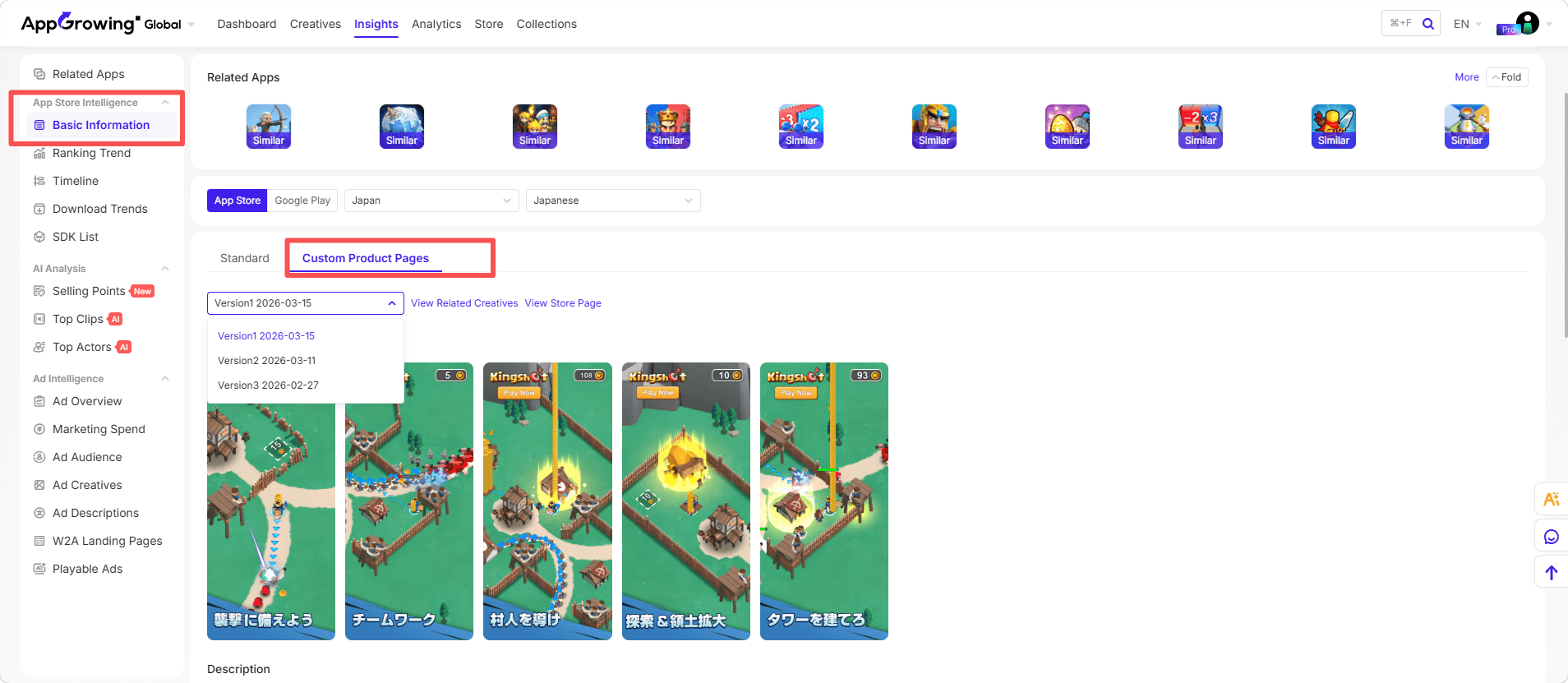
-
Content differentiation centered on user preferences
For both games and non-game apps, publishers create ad creatives tailored to different user preferences; this approach extends to custom product pages.
Example: Century Game’s Whiteout Survival frequently updates its store versions, matching the cadence of creative iteration. It also segments target audiences and prepares different sets of five store images, reinforcing the same core selling point so the user’s perception from click to store page remains consistent.
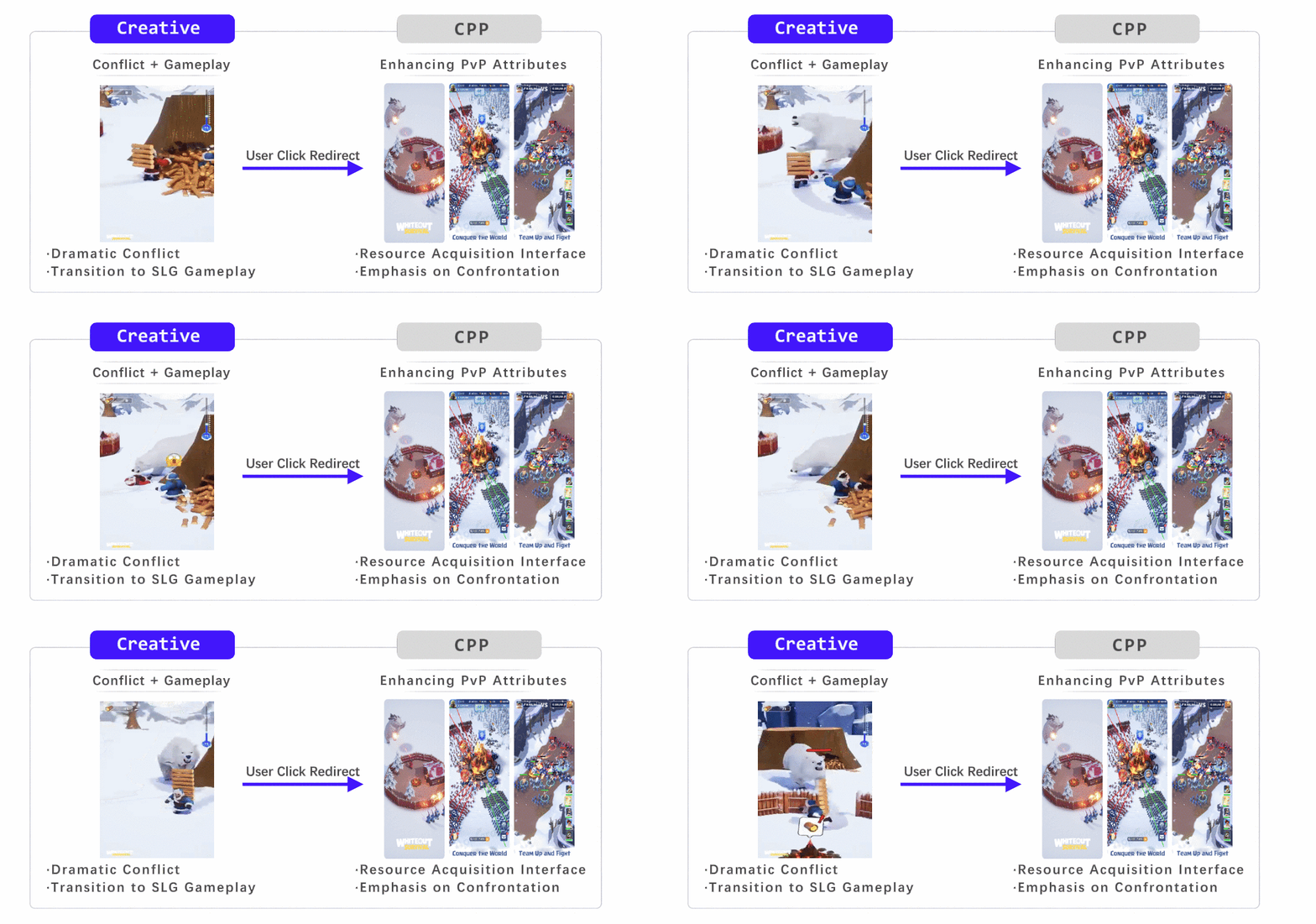
Emphasis on continuity from creative to store page
This approach treats the creative and the store page as one narrative serving a core selling point. The creative attracts the click; the store page validates the user’s expectation.
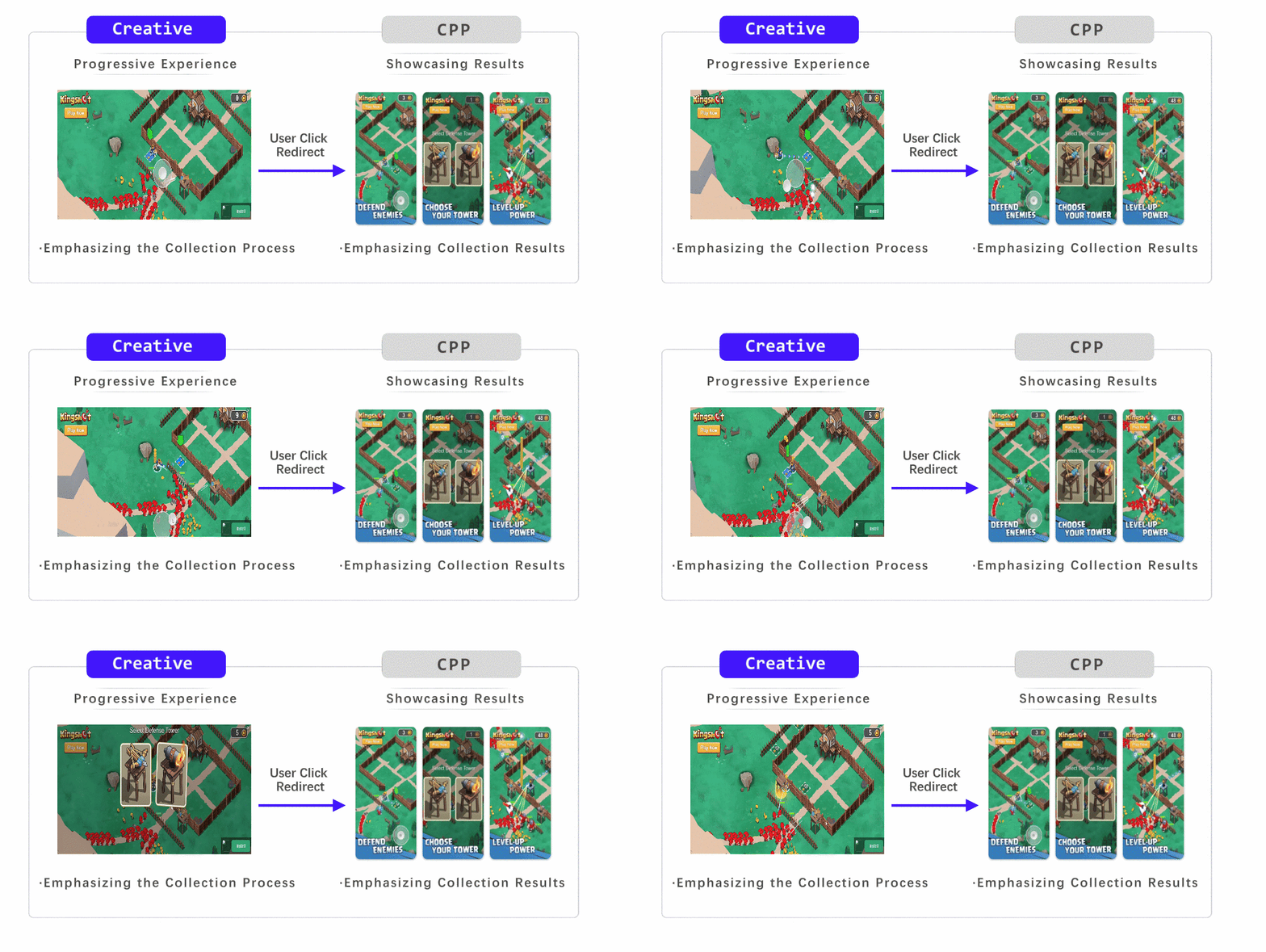
A primary form is a “process → result” handoff.
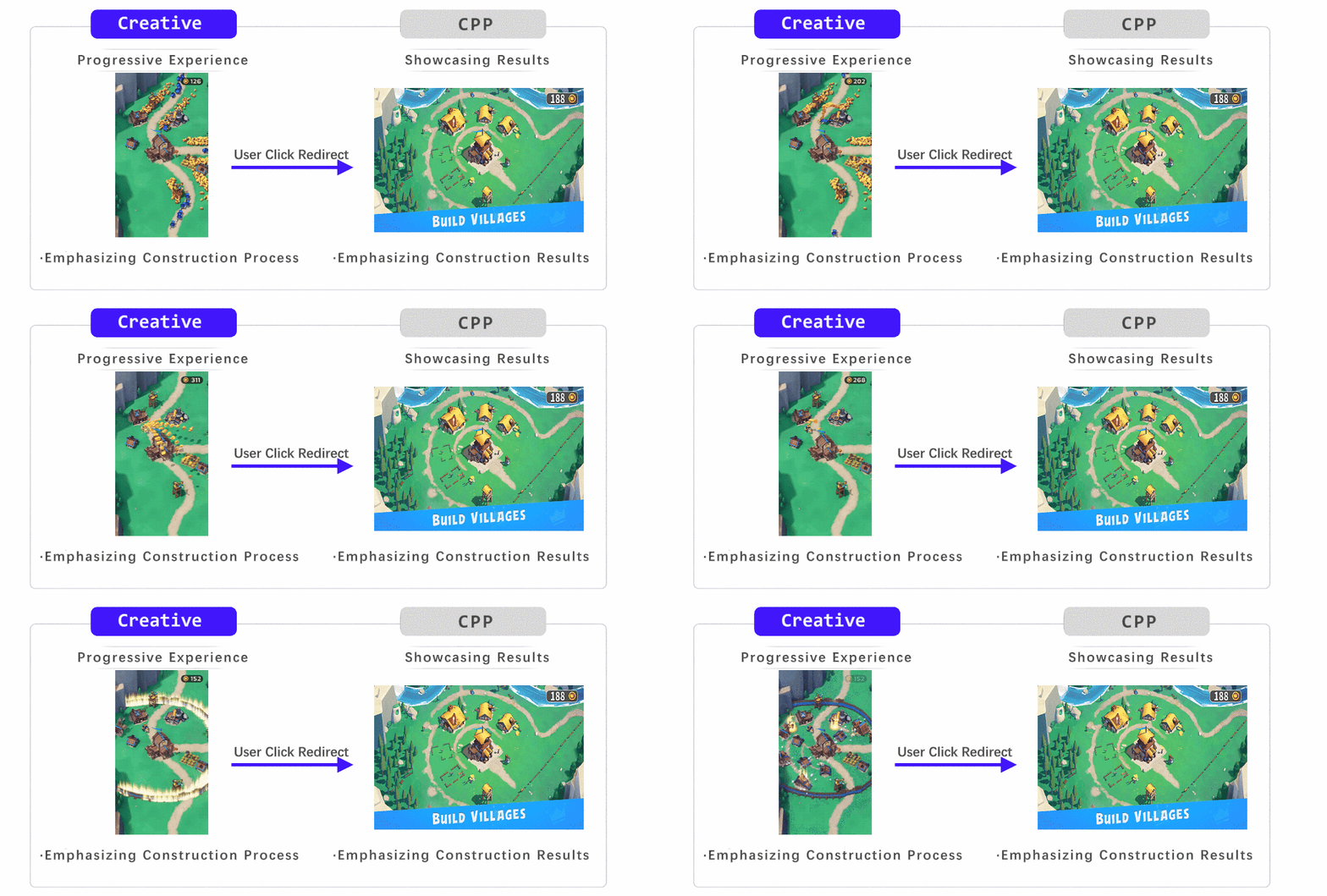
Playable ads also suit this design.
For instance, a playable ad where users collect enough coins and choose one of two weapons to fend off enemies should have store images that show the two-choice mechanic and weapon upgrades, preventing an interruption in the user experience.
Conclusion
In short, aligning custom product pages with creative strategy both reaches more user types with differentiated content and preserves a consistent user experience, ultimately improving conversion.
From ad to store product page to actual game experience, only a stable content closed-loop can sustain conversions under the new distribution logic.
