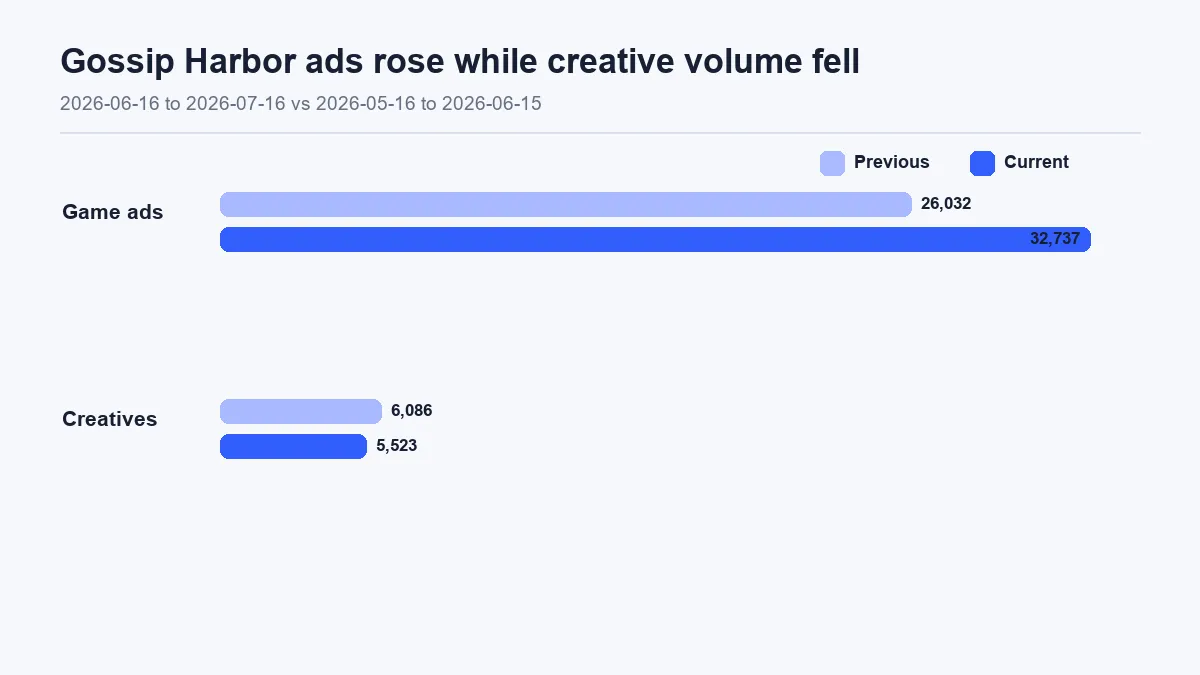
Story-led ads often fail because the emotion and gameplay feel like two separate assets. Gossip Harbor creates a stronger path when cold, a ruined home, and a mother-and-child crisis establish a repair task, then merging, sealing windows, lighting fires, and raising temperature visibly solve it. Game ads rose 25.8% while creative volume fell 9.2%, so retained story families and their gameplay transitions deserve the first review.
| Metric | Previous Period | Current Period | Change |
|---|---|---|---|
| Game ads | 26,032 | 32,737 | +25.8% |
| Game creatives | 6,086 | 5,523 | -9.2% |
How does the winter crisis create a gameplay task?
The current aggclaw query identified about 140 high-impression Gossip Harbor materials. More than 55 opened with a winter or snow emotional narrative, and at least 22 repeated a cold house and a mother or child needing help. More than 18 used the recognizable blonde woman and red-haired child pairing. These are app-specific observations inside the returned sample.
The crisis works when it names a state that gameplay can change. A broken window implies sealing. A freezing room implies heat. Damaged furniture implies repair. The opening should not merely make the character suffer. It should give the viewer a reason to expect a restoration action in the next section.
What makes a transition genuinely connect gameplay?
Approximately 40 winter-story materials moved into merge and repair after the first 15 to 25 seconds. The transition used language similar to Let's fix this place up, then revealed a merge grid, a repair choice, or direct interaction with the room. Several creatives used a visible temperature gauge, allowing the viewer to see warmth increase as windows were sealed or fires were lit.
A useful review records three fields. What problem did the story establish? What was the first player action? What state visibly changed? When the answer is cold, seal a window, and higher temperature, the path is coherent. When the narrative introduces abandonment but the next scene shows unrelated merging, the transition needs another bridge.
What should teams inspect when ads rise and creatives fall?
Gossip Harbor game ads increased from 26,032 to 32,737, while game creatives declined from 6,086 to 5,523. Higher advertising activity with a smaller creative pool supports a retained-family review. Teams should identify which story openings remain visible and whether delivery is concentrating around a narrower set of narrative-to-play paths.
Compare winter crisis, secret reveal, and absurd comedy as separate openings. Then check whether each reaches real merge, repair, or renovation gameplay. The activity relationship does not prove stronger efficiency. It tells the team to inspect surviving structures before requesting a large set of unrelated new stories.
How should story, gameplay, and payoff be tested?
In round one, keep the repair action stable and change only the crisis. Compare a freezing room, broken furniture, and a damaged shelter. In round two, keep the crisis fixed and vary the response through sealing, lighting a fire, merging furniture, or cleaning. In round three, hold both and vary the payoff through temperature, a restored room, character safety, or access to another story scene.
The final frame should show the result of the same task. A warm completed room is stronger than an unrelated reward because it closes the loop the viewer entered. If the close also promises No Ads, permanently free access, or more than 10,000 levels, move those expressions into a separate product, legal, and regional review. Emotional continuity cannot substitute for factual support.
The weekly monitor should also record story duration, first gameplay reveal, and the moment the payoff appears. If the narrative becomes longer without making the transition clearer, revise the bridge before adding another emotional scene. If several stories lead to the same window-sealing or room-repair action, keep them inside one gameplay family and compare their openings as variants. Open a new concept row only when the crisis changes the problem the player must solve or the gameplay changes the visible state feedback. This keeps narrative variety from hiding a repetitive mechanic and gives writers a precise reason for the next script.
Review the asset without sound as well. Cold, damage, the first repair action, and the restored state should remain legible even when the emotional voiceover is unavailable.
