Survival strategy competitors should not be averaged into one trend because their ad and creative patterns moved differently. How to Compare Survival Strategy Competitors When Ads Slow Down should compare Last War, Whiteout Survival, and Last Z separately. Verified AppGrowing data shows Last War and Whiteout Survival declined across both metrics, while Last Z reduced ad volume but increased creative volume.
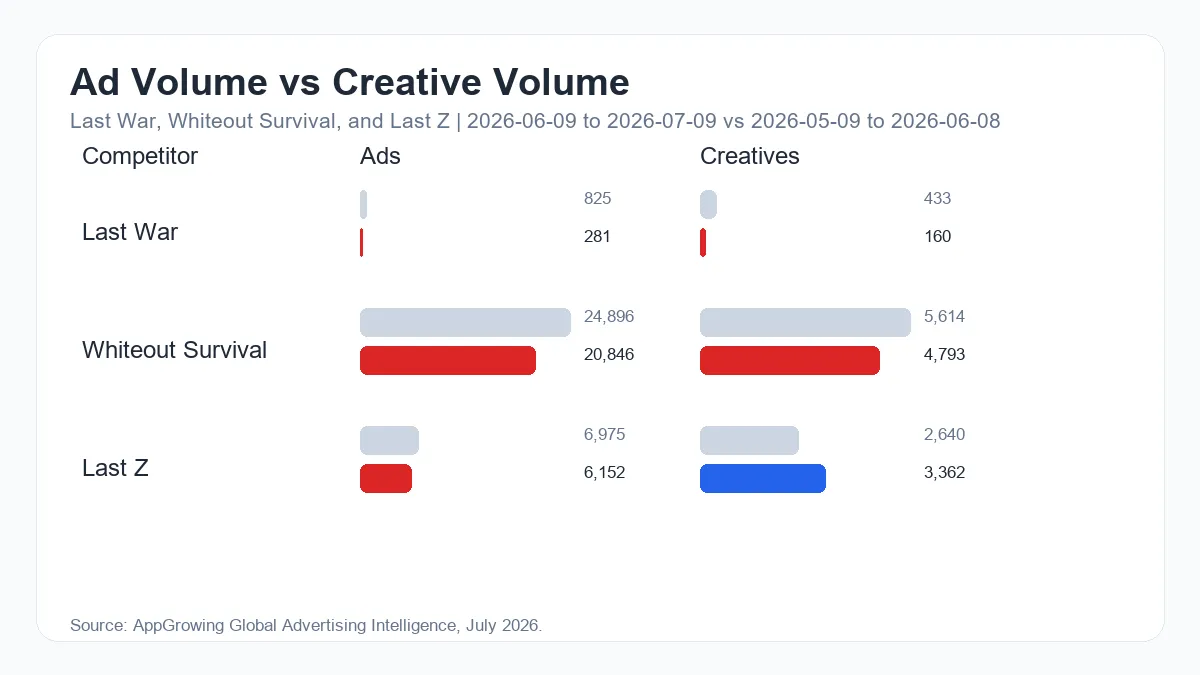
| Competitor | Previous Ads | Current Ads | Ad Change | Previous Creatives | Current Creatives | Creative Change |
|---|---|---|---|---|---|---|
| Last War | 825 | 281 | -65.9% | 433 | 160 | -63.0% |
| Whiteout Survival | 24,896 | 20,846 | -16.3% | 5,614 | 4,793 | -14.6% |
| Last Z | 6,975 | 6,152 | -11.8% | 2,640 | 3,362 | +27.3% |
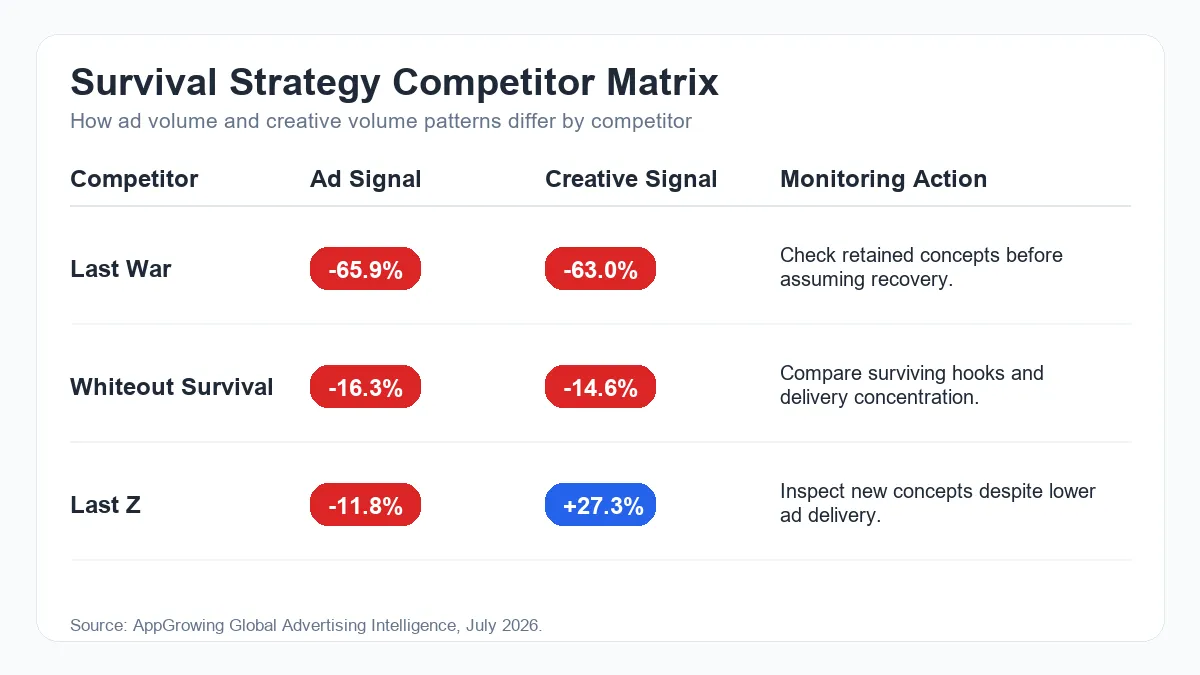
Why should the three games not become one conclusion?
A shared survival strategy genre does not mean the same delivery behavior. Last War declined sharply across both ad volume and creative volume. Whiteout Survival also declined across both metrics. Last Z moved differently, with lower ad volume and higher creative volume.
Averaging the three would hide both cooling signals and testing signals.
Which review path fits each competitor?
Last War should start with surviving creatives because both metrics declined sharply. Whiteout Survival should also focus on retained assets and core-message stability. Last Z should be reviewed for new tests and theme changes.
One watchlist can contain different review paths. Teams should not use the same action just because the games share a genre.
How should this benchmark guide the next cycle?
The next cycle should segment competitors instead of treating survival strategy as one block. Cooling competitors need surviving-creative review. Testing competitors need new-concept review. Divergent competitors need follow-up to see whether the split continues.
This helps UA teams spend limited review time on the competitors most likely to produce new information.
